Side project, no clientJul 2025・Jul 2025・119 views
Converso: voice AI tutors
Frontend・
Backend
Side project: there is no client, I built it to study or to experiment.
Personal project built following a course: a learning platform where you talk to AI tutors by voice, configurable by subject, topic and tone, with subscriptions, session history and bookmarks.Technologies:
Next.js
Supabase
Tailwind CSS
Typescript
Vapi
Shadcn UI
Zod
Sentry
Clerk
Vercel
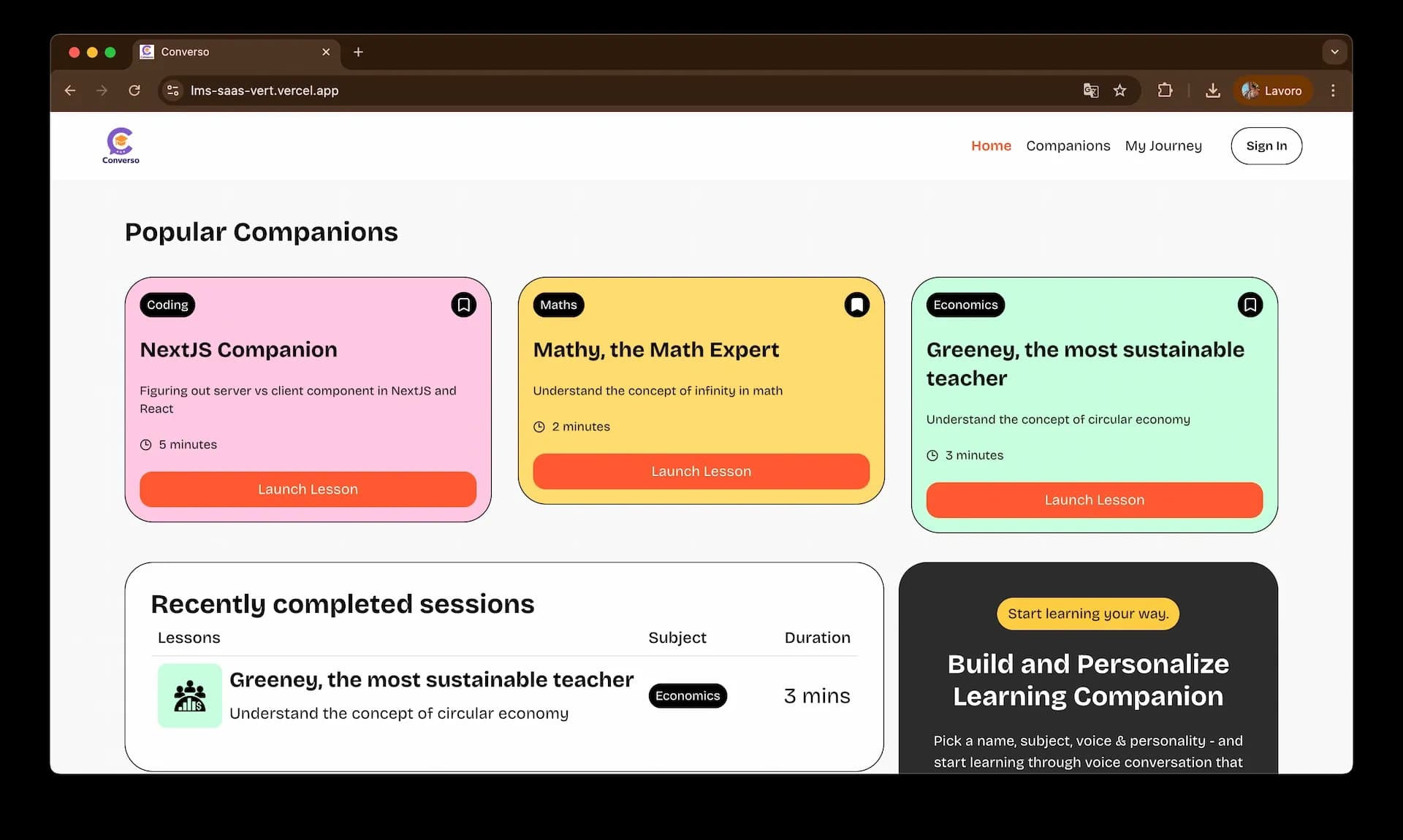
What I explored. Real-time voice AI: conversations with speech recognition and synthesis through Vapi, tutors saved with their settings and, around them, a SaaS product with login and subscriptions on Clerk, data on Supabase and monitoring with Sentry.
What it helped with later. The picture of a complete AI product, from the feature to the plan that unlocks it, useful when I built my own products.
Visit: